The owner of an online coffee shop in Almaty wants to invest in the brand: a new logo, a packaging shoot, a couple more bloggers. His argument goes like this: "A kilo costs 15,000 ₸ with us, a new roastery in the next district sells a similar Ethiopian for 12,000 ₸, and people still order from us. So the brand is strong, and that is what we should grow."
It is the same shop the lesson on what marketing is started with: freshly roasted beans delivered all over Kazakhstan. Its customers really do stick around. Over the year, the 840 people who ordered more than once placed 5,640 of the 7,200 orders. But these numbers do not show what they pay the extra 3,000 ₸ for: the name, the freshness or the delivery. The shop and the numbers are illustrative.
What a brand is and why it is called an asset
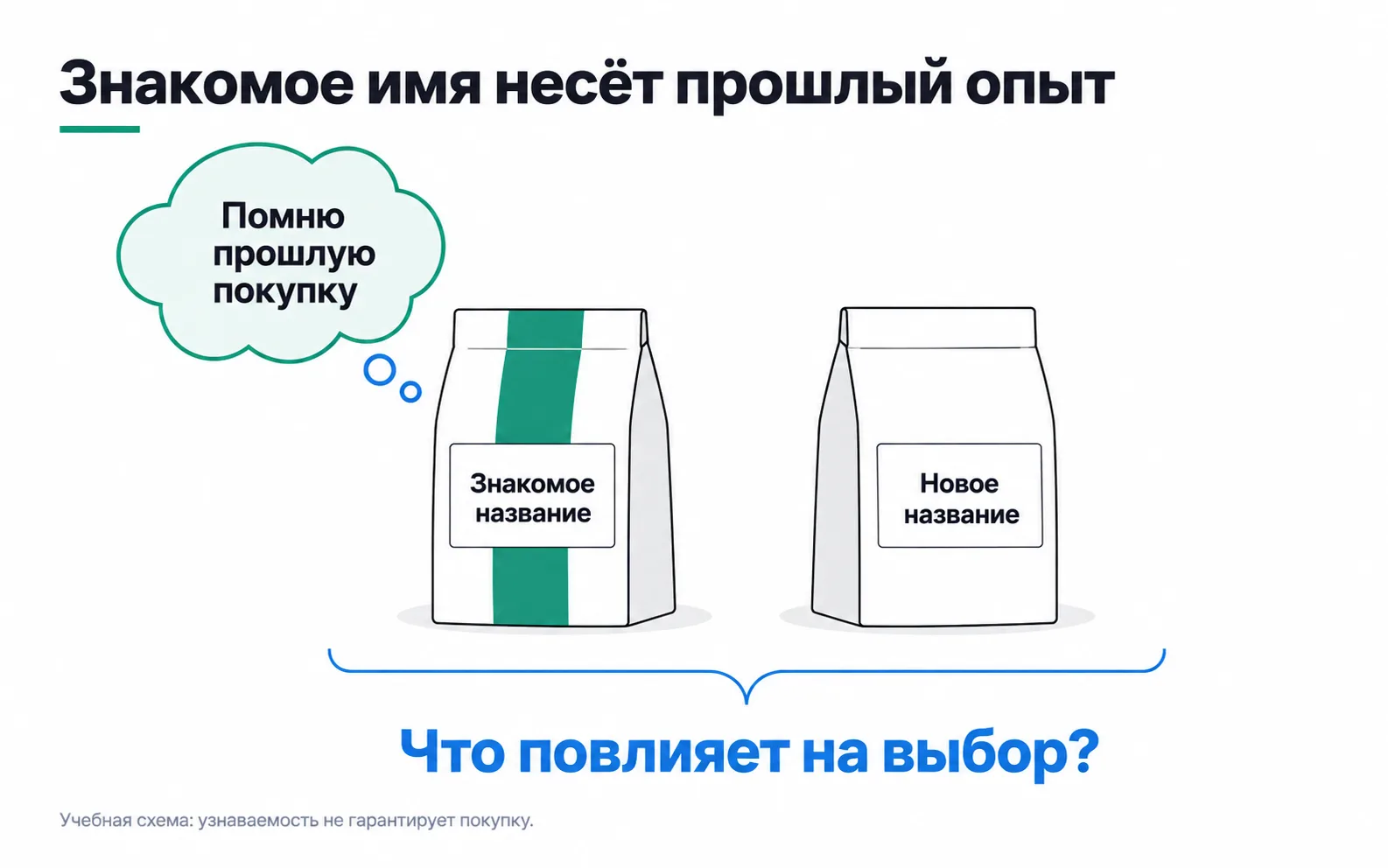
A brand is what people remember about a name and what they expect from it. For the shop's customers it might be "the roast date is on the bag, and you can trust it" or "they deliver in three days, even to Karaganda". That expectation comes from their own orders, from what friends tell them and from advertising.
A brand is called an asset in the management sense: what was invested earlier keeps working for future sales. Every bag with the right date makes the next order more likely, and a customer who trusts the shop does not leave for the first seller who is cheaper. Hence the argument the owner repeats from articles about branding: a strong brand holds its price and keeps its customers.
For your business that is a hypothesis, and it gets tested. There is large-scale research too: Nielsen estimates from its experience that a one-point gain in brand awareness or consideration adds about 1% to sales on average. Nielsen does not say which brands that average was calculated on, and a shop with 2,400 customers would not even spot such a point in a survey. So it looks at what its CRM holds: whether people come back, and why they agree to pay more.
Recognise, recall, choose
A brand works in several steps. Someone may recognise the bag in their feed but fail to recall the name when a colleague asks where to buy beans. They may recall it and still order wherever it is cheaper. They may order every month purely out of habit. So the task "strengthen the brand" says nothing until you decide which step you want to change and which observation will show the change.
| Step | How to find out | What it will not show |
|---|---|---|
| They recognise it | Show the bag or a post without the name and ask whose it is | Whether they want to buy |
| They recall it | Ask "Where do you buy your beans?" without a list of options | Why they choose you in particular |
| They prefer it | Ask why they order from you and where else they bought beans | What happens when something cheaper appears nearby |
| They come back | The share of new customers with a second order within 60 days, from the CRM | What keeps them: the name, the taste or the delivery |
Write down how the question was worded, who was asked and when. If in spring you asked "Do you know this shop?" and in autumn "Which coffee shops do you know?", those are two different measurements, and the growth between them means nothing.
A price gap is not yet brand strength
Back to the owner's argument. To say that customers pay the 3,000 ₸ for the name, you first have to remove everything else that differs between the two offers. The marketer put the differences in a table:
| The shop | The new roastery | |
|---|---|---|
| One kilo | 15,000 ₸ | 12,000 ₸ |
| Roast date | On the bag, roasted this week | On the bag |
| Delivery | Across Kazakhstan in 2-5 days | Almaty only |
| Payment | By card on the site or Kaspi QR to the courier | Bank transfer in advance |
| Instagram followers | 9,000 | 27,000 |
This is analysis for the owner, not ad copy: in its ads the shop does not compare itself with anyone. A customer in Karaganda has nothing to compare with: the roastery does not deliver there. A customer in Almaty can compare, but even for them part of the gap may come down to freshness and convenience. "Roasted this week" and "date on the bag" part ways if the roastery's bag shows a date three weeks old, and not everyone is willing to pay an unfamiliar seller by transfer in advance. A price gap reflects quality, delivery and service as well, so you cannot put all of it down to the brand.
Followers settle nothing in this argument. The counter shows how many people tapped "Follow", not how many of them buy beans or at what price. The roastery has three times as many followers, and the shop has no idea how many regular customers the roastery has.
How to test the brand hypothesis
The test has two parts: find out from customers why they choose the shop, and see how they behave where a comparable cheaper offer exists.
Ask why they choose you
Of the 300 regular customers the shop singled out in its RFM analysis, 210 have agreed to be messaged on WhatsApp. The marketer sent them two questions: "Why do you order your beans from us?" and "Where else have you bought beans in the last three months?". He gave no answer options, so as not to lead anyone. 64 people replied, and he sorted the answers to the first question by meaning:
| Reason, in the customers' words | Answers |
|---|---|
| Fresh roast, date on the bag | 27 |
| The taste of a particular coffee | 15 |
| Fast delivery to my city | 10 |
| "Used to it", "I trust them", "never let me down" | 8 |
| Recommended by friends | 4 |
| Total | 64 |
The eight answers about trust and habit come closest to pure brand: the person does not double-check the date or look for anything cheaper, because the shop has never let them down. The other 56 name freshness, taste, delivery and a friend's advice, that is, the product, the terms and somebody else's recommendation. The line is blurry. "Fresh roast" is also an expectation attached to the name, and the shop earned it. But that expectation rests on the beans actually being fresh. Let a couple of bags arrive with an old date and it will go, whatever the packaging looks like.
To the second question, 17 of the 64 said they had bought beans somewhere else in the past three months: 9 at a supermarket and 8 at other roasteries, 5 of them at that new one. Five have tried the roastery but still order from the shop as well. That said, a survey like this has a blind spot: the people who answered are the ones who stayed. Anyone who left for the roastery for good is not in it.
Compare behaviour where a cheaper choice exists
The customers who left show up in the CRM. A competitor with similar beans for less exists only in Almaty: the roastery delivers within the city and nowhere else. That is a ready-made comparison. If price matters most to customers, people in Almaty will start leaving while customers in other cities keep ordering as before.
The roastery started selling in early August. The marketer took customers who by then had two or more orders and had ordered in the 60 days before it opened, meaning they were still buying at their usual pace. Then he looked at which of them did not order once in the 60 days after:
| Almaty | Other cities | |
|---|---|---|
| Ordered in the 60 days before the opening, two or more orders | 360 | 240 |
| No order in the 60 days after | 54 | 31 |
| Share | 15% | 13% |
Customers in Almaty dropped off two points more often, but with this many customers the share wanders by a couple of points anyway. On top of that, customers in Almaty and in other cities differ in more than whether a roastery is nearby. The conclusion is more modest than the owner would like: there is no mass exodus to a roastery that is 3,000 ₸ cheaper, though it may have lured away a few people. The lapsed customers in Almaty get a personal message, the way the "valuable but slipping" segment did in the RFM analysis: where did they go, and why.
Branded search and direct visits
Two more metrics are easy to mistake for brand strength. Searches for the shop's name grow when new people hear about it, but also while ads are running, when regulars look up the site to repeat an order, and before holidays if coffee is bought as a gift. These queries are counted in Search Console with a filter on the name, separately for the Latin and Cyrillic spellings, the way the IELTS centre did when it checked its brand platform. A rise on the chart shows interest in the name; where that interest came from has to be worked out separately.
Direct visits are even more misleading. In GA4, (direct) / (none) traffic means visits with an unknown source. It covers someone who typed the address, a click on a link without UTM tags, a link from a PDF or through a URL shortener, and a visit whose source an ad blocker kept from being tracked. At the shop, the links the manager sends regulars on WhatsApp without tags land here too. If he starts messaging them more often, direct visits will grow while the brand stays exactly where it was.
What to do with the answer
The test does not tell the owner there is no brand. It shows what the brand rests on. Customers named freshness, taste and delivery, so the main investment in the brand is keeping those promises: roasting on schedule, never shipping bags with an old date, sorting out late parcels. A new logo cannot replace that. And after a packaging change, regulars may fail to recognise their bag in the feed, and recognition will have to be built again.
So that trust does not depend on who happens to be on shift, the way the shop answers when something goes wrong is written into the rules of its brand voice. And the four "recommended by friends" answers mean the shop already has brand evangelists: regular customers who recommend it without being paid.
Exercise: a brand hypothesis for your own project
Take a business that has regular customers: your own, a client's or a friend's.
If the competitor has everything you have in the differences table, only cheaper, and customers still stay, that is an argument for the brand, and it is worth questioning the customers who did leave. If there are many differences, they explain the price gap, and it is too early to call it brand strength. Put "I trust them", "they never let me down" and "used to it" down to the brand, and "tasty", "fast" and "easy to pay" down to the product and terms. With 10-20 answers you do not count shares; you read the wording. And if you cannot compare groups because the competitor is everywhere you are, say so in the paragraph: behaviour cannot be tested yet, and the conclusion rests only on what customers said.